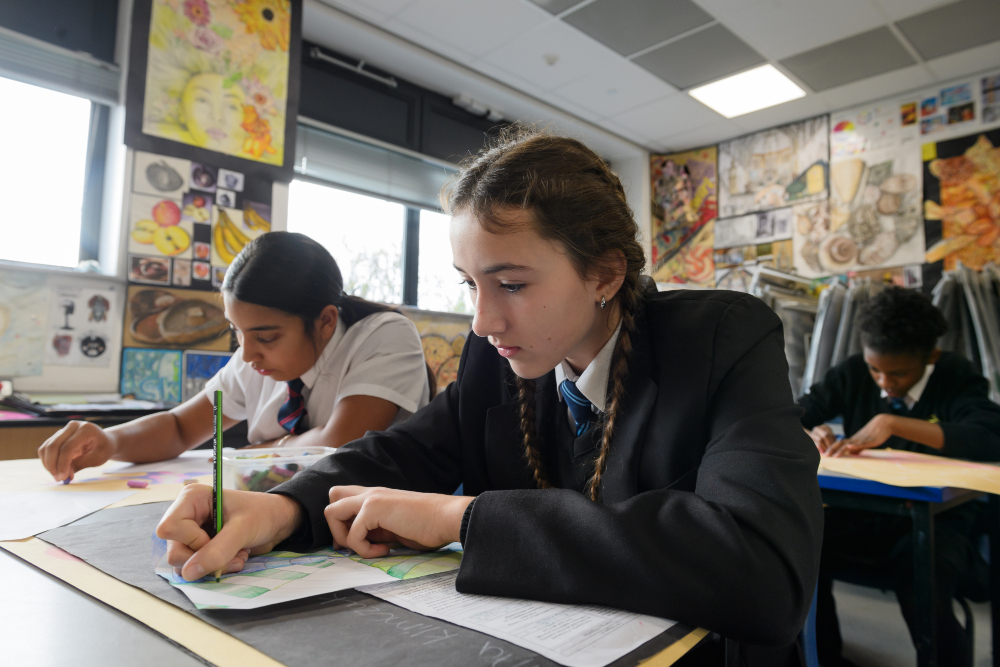
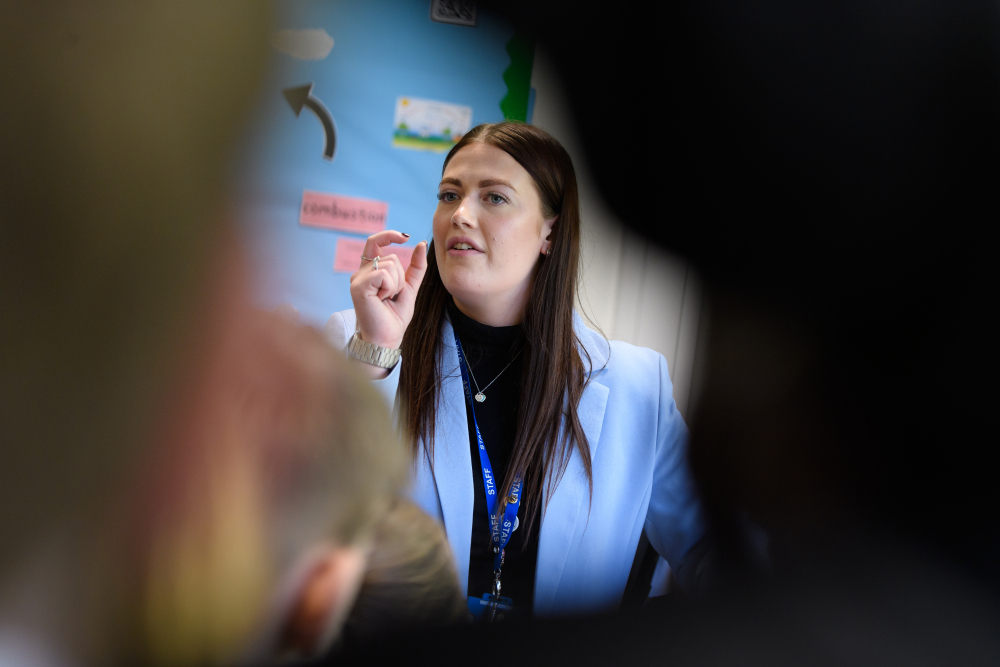
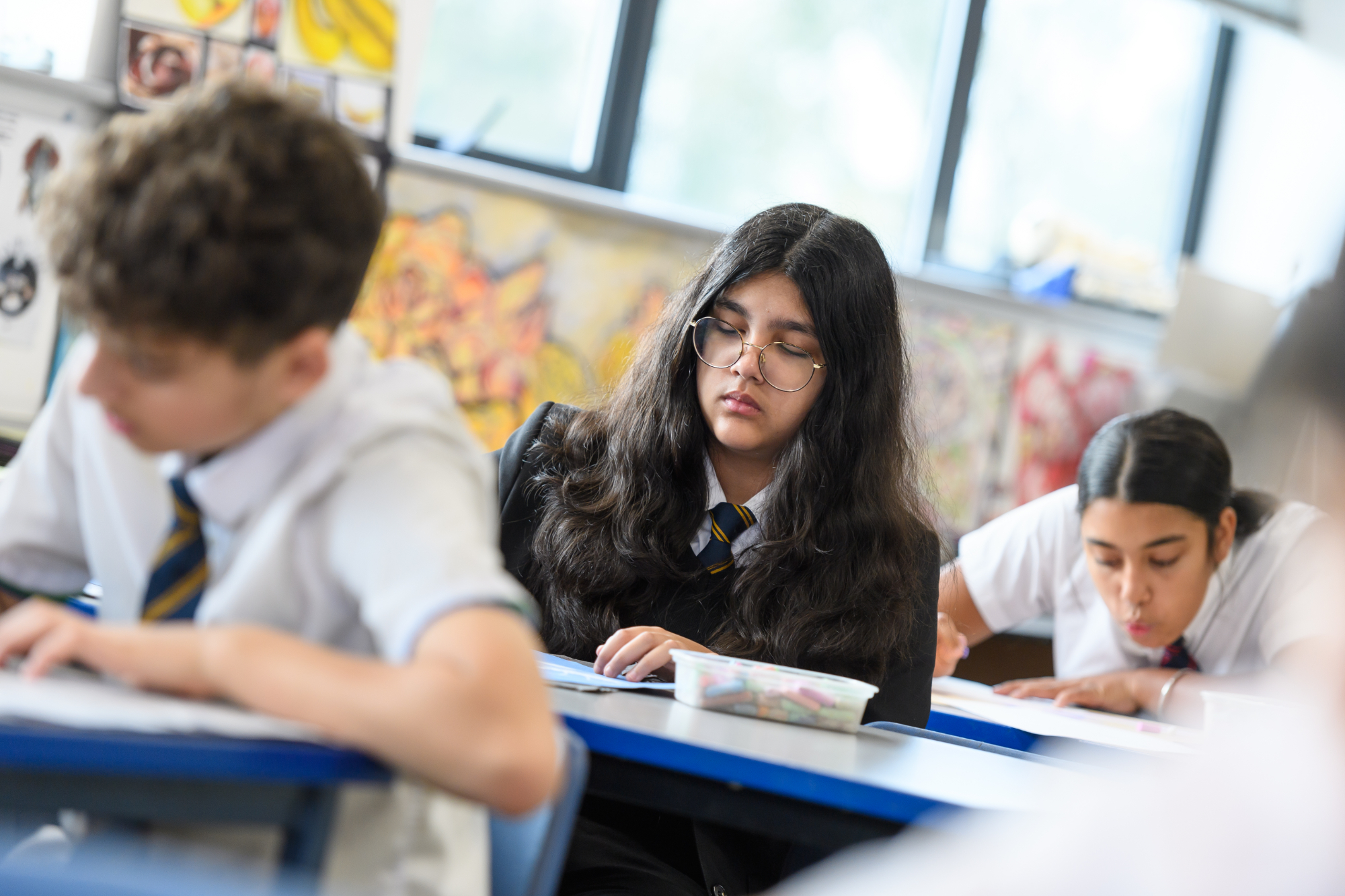
The Social Studies faculty is made up of a range of different departments that work together to deliver a well rounded and exciting curriculum to encourage individuals to have a developing understanding and awareness of themselves, their world and the people and society around them.

We deliver a skills based curriculum at KS3 which build both knowledge and skills to prepare our students to then pursue any of these subject areas at KS4.

Within the faculty we teaching history, geography, RE and PSHE to all students in Key Stage 3 and we offer courses history, geography, RE, and psychology at Key Stage 4, along with PSHE.

Topics overview

Geography

Year 7

Geography in Year 7

Autumn

  • What Does A Cartographer Need To Know About Geography?
  • What Would A Future Prime Minister Need To Know About the UK?

Spring

  • What Does A Hydrologist Need To Know About Rivers?
  • What Does A Town Planner need To Know About Housing In The UK?

Summer

  • How Do Diplomats Support International Relations?
Year 8

Geography in Year 8

Autumn

  • Moral Issues: Deforestation
  • Moral Issues: Climate Change

Spring

  • How Do Humans Interact With Cold Climates?

Summer

  • How Does A Demographer Help Governments Manage Resources?
  • How Do Meteorologists Forecast the Weather?
Year 9

Geography in Year 9

Autumn

  • Superpowers
  • Middle East

Spring

  • Natural Resources – Can Earth Cope?
  • How Do Disaster Risk Managers Reduce The Harm From Natural Hazards?

Summer

  • Coastline Of The UK
  • Rocks & Geological Timescales

History

Year 7

History in Year 7

Autumn

  • Who were the Anglo-Saxons?
  • The Normans

Spring

  • The Crusades and Magna Carta
  • The War of the Roses

Summer

  • The Tudors
  • The English Civil War
Year 8

History in Year 8

Autumn

  • The British Empire

Spring

  • Slavery
  • The Industrial Revolution

Summer

  • Causes of World War One
  • Events of World War One
  • The Interwar Period 1918-1939
Year 9

History in Year 9

Autumn

  • World War Two

Spring

  • The Holocaust

Summer

  • The Cold War
  • American Civil Rights

PSHE

Year 7

PSHE in Year 7

Autumn

  • Transition & Safety
  • Developing Skills & Aspirations

Spring

  • Diversity
  • Health & Puberty

Summer

  • Building Relationships
  • Financial Decision Making
Year 8

PSHE in Year 8

Autumn

  • Emotional Wellbeing
  • Community & Careers

Spring

  • Discrimination
  • Drugs & Alcohol

Summer

  • Identity & Relationships (includes Sex Education)
  • Digital Literacy
Year 9

PSHE in Year 9

Autumn

  • Peer Influence, Substance Use and Gangs
  • Setting Goals

Spring

  • Respectful Relationships
  • Healthy Lifestyle

Summer

  • Intimate Relationships (includes Sex Education)
  • Employability Skills

RWV

Year 7

RWV in Year 7

Autumn

  • Authority & Power: What Is My WV?
  • Believing & Belonging: What Is Religion And Can We Define: Dharmic Faiths

Spring

  • Believing & Belonging: What Is Religion And Can We Define: Abrahamic Faiths

Summer

  • What Do We Mean By Worldviews?
Year 8

RWV in Year 8

Autumn

  • Authority & Power: Should The Bible Be Taken Literally?
  • Belonging & Believing: How Does Malala Embody Her Islamic Faith?

Spring

  • Belonging & Believing: Students Learn About Disciplines: Theology + HSS + History

Summer

  • Social Justice: How & Why Do Sikhs Pursue Equality?
  • Suffering & The Holocaust
  • If It Is The Same Worldview Why Does It Look So Different?
Year 9

RWV in Year 9

Autumn

  • Living Well: Are Peace & Reconciliation Essential For Living Well?

Spring

  • Why Do People Commit Crimes?

Summer

  • Medical Issues
Faculty Courses

GCSE Geography

Aims & Objectives

AQA GCSE Geography

This exciting course is based on a balanced framework of physical and human geography. It allows students to investigate the link between the two themes, and approach and examine the battles between the man-made and natural worlds.

Course Structure

What is assessed…

  • The challenge of natural hazards – Earthquakes
  • The living world – Hot deserts and Tropical rainforests.
  • Physical landscapes in the UK – Rivers & Coasts

How it’s assessed

  • Written exam: 1 hour 30 minutes
  • 35% of GCSE

What’s assessed…

  • Urban issues and challenges – Rio de Janeiro & Bristol
  • The changing economic world – UK and Brazil
  • The challenge of resource management – Global food supply.

How it’s assessed

  • Written exam: 1 hour 30 minutes
  • 35% of GCSE

What’s assessed…

  • Issue evaluation – This is where we study pre-release resources booklet 12 weeks before Paper 3 exam.  The topic for this changes each year.
  • Fieldwork –  Students need to undertake two geographical enquiries (physical & human)
  • Geographical skills
  • Students are required to develop and demonstrate a range of geographical skills.

How it’s assessed

  • Written exam: 1 hour 15 minutes
  • 30% of GCSE

GCSE History

Aims & Objectives

History

This course will extend students’ knowledge of history by studying new topics and revisiting previous topics to extend knowledge and embed historical skills. Topics chosen are an exciting mix of social and political history spanning from Medieval and Tudor England, The American West to Nazo Germeny.  The course supports progression to A Level.

Course Structure

  • Students study how key features in the development of medicine were linked with the key features of society in Britain in the periods 1250-1500, 1500-1700, 1700-1900 and 1900 to the present
  • This will involve studying patterns of change, trends and turning points, and the influence of factors inhibiting or encouraging change within periods and across the theme. The key factors are: individuals and institutions (Church and government); science and technology; and attitudes in society.
  • The British sector of the Western Front, 1914–18: injuries, treatment and the trenches is designed to develop students’ understanding of the use of historical sources and building historical enquiries

How it’s assessed

  • Paper 1 written exam 1 hour 15 mins
  • 30% of total marks
  • Edexcel set and marked

  • The situation on Elizabeth’s accession
  • The ‘settlement’ of religion
  • Challenge to the religious settlement
  • The problem of Mary, Queen of Scots
  • Plots and revolts at home
  • Relations with Spain
  • Outbreak of war with Spain, 1585–88
  • The Armada
  • Education and leisure
  • The problem of the poor
  • Exploration and voyages of discovery
  • Raleigh and Virginia

How it’s assessed

  • Paper 2 written exam 1 hour 45 mins
  • Students take this exam at the same time as the American West topic)
  • 40% of total marks
  • Edexcel set and marked

  • The creation of the “Permanent Indian Frontier”
  •  The Plains Indians; their beliefs and way of life
  •  Migration and early settlement; The Donner Party and Mormons
  •  Conflict and tension. The California Gold Rush, law and order and The Fort Laramie Treaty of 1851
  •  The Homestead Act 1862 and the Pacific Railroad Act of 1862
  • The growth of the cattle industry; cowboys and ranchers
  •  Impact upon Native American Indians and the Indian wars
  • The end of the cattle industry
  • Exodusters and the Oklahoma Land Rush of 1893
  • Billy the Kid and Wyatt Earp
  •  Destruction of the way of life of the Native Americans and extermination of the buffalo
  • The end of the Indian Frontier

How it’s assessed

  • Paper 2 written exam 1 hour 45 mins.  Students take this exam at the same time as the Early Elizabethan England topic).
  • 40% of total marks
  • Edexcel set and marked

  • The setting up of the Weimar Republic.
  • Spartacists, Freikorps, the Kapp Putsch.
  • The challenges of 1923: hyperinflation; the French occupation of the Ruhr.
  • The work of Stresemann.
  • Changes in society and culture, 1924–29
  • The Munich Putsch, 1923
  • How Hitler became Chancellor, 1932–33
  • The Reichstag Fire, the Enabling Act and the banning of other parties and trade unions.
  • The Night of the Long Knives
  • The Gestapo, the SS, the SD and concentration camps.
  • Nazi policies towards the Churches
  • Goebbels and the Nazi use of Propaganda
  • Opposition to the Nazis
  • Life in Nazi Germany, 1933–39
  • Nazi policies towards women and the young
  • Employment and living standards
  • Nazi racial beliefs and the treatment of minorities
  • The persecution of the Jews

How it’s assessed

  • Paper32 written exam 1 hour 20 mins.
  • 40% of total marks.
  • Edexcel set and marked

GCSE Psychology

Aims & Objectives

Edexcel GCSE Psychology

In addition to helping students acquire subject knowledge, the Edexcel specification provides a sound understanding of methods and approaches in psychology at an introductory level. It also illustrates these methods and approaches through various topic areas representing the core areas of social, cognitive, developmental, biological and individual differences. The course develops investigation and report writing skills, along with analytical and critical thinking skills.

Course Structure

What is assessed…

  • Topic 1: Development – How did you develop?
  • Topic 2: Memory – How does your memory work?
  • Topic 3: Psychological problems – How would psychological problems affect you?
  • Topic 4: The brain and neuropsychology – How does your brain affect you?
  • Topic 5: Social influence – How do others affect you?

How it’s assessed

  • Written exam: 1 hour 45 minutes
  • 55% of GCSE

What’s assessed…

  • Topic 6: Criminal psychology – Why do people become criminals?
  • Topic 9: Sleep and dreaming – Why do you need to sleep and dream?
  • Topic 11: Research methods – How do you carry out psychological research?

How it’s assessed

  • Written exam: 1 hour 20 minutes
  • 45% of GCSE

GCSE Religious Studies

Aims & Objectives

AQA GCSE Religious Studies Spec A

Religious Education is a stimulating GCSE course that provides a great opportunity for students to reflect and explore current issues and to develop social, cultural, political and historical awareness.

While studying this course pupils will undertake two components; the study of Religion: where students will study the key beliefs, teachings and practices in two religions: Christianity and Islam and Thematic Studies: which will enable students to utilise their knowledge of the religions studied and to discuss and reflect on religious responses to various philosophical and ethical issues.

Course Structure

What is assessed…

  • Christianity – Beliefs and Practices
  • Islam – Beliefs and practices

How it’s assessed

  • Written exam: 1 hour 45 minutes
  • 50% of GCSE

What’s assessed…

  • Theme A – Relationships and families
  • Theme B – Religion and Life
  • Theme E – Religion Crime and Punishment
  • Theme F – Human Rights

How it’s assessed

  • Written exam: 1 hour 45 minutes
  • 50% of GCSE
Social Studies Staff

Faculty Leader of Social Studies

Miss K Waudby
Email

Assistant Faculty Leader and Subject Leader of History

Ms A Moore
Email

Subject Lead for Religious Education and Teacher of Psychology

Miss R Begum
Email

Assistant Headteacher and Subject Leader of Geography

Mrs K Collins
Email

Teacher of History

Mrs N Garrow
Email

Teacher of History

Mr T Latti
Email

Subject Leader of PSHE

Miss D Marie
Email

Teacher of Geography

Miss K McHale
Email

Subject Leader of Vocational Studies

Miss J Mortimer
Email

Head of Year 9 and Teacher of Geography

Mrs L Owen
Email

Deputy Headteacher and Teacher of Geography

Mr D Walden
Email

Faculty Administrator

Miss D Sutton
Email